NeuroMedhub

NeuroMedHub is created by a Medical Doctor specialized in Clinical Neurophysiology with many years of experience in neurophysiology and neuroscience education. My goal is to share knowledge in a clear and accessible way, bridging science and practice for learners worldwide.

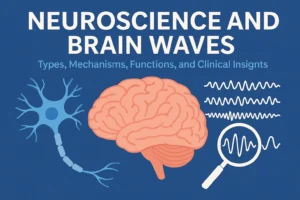
Illustration of a human brain, neuron, and brain waves with magnifying glass, representing neuroscience and brain wave mechanisms

Neuroscience and Brain Waves: Types, Mechanisms, Functions, and Clinical Insights

🔵 Note: This article is intended for healthcare professionals and contains advanced medical information. 1. Introduction Brain waves (or neural oscillations) are rhythmic, repetitive patterns of neural activity occurring in the central nervous system. They are measured non-invasively via electroencephalography (EEG) and sometimes via magnetoencephalography (MEG). Brain waves are key to understanding cognition, sleep, consciousness, […]

Neuroscience and Brain Waves: Types, Mechanisms, Functions, and Clinical Insights Read More »
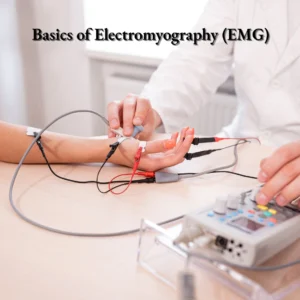
Illustration of electromyography with upper limb, electrodes, and wave patterns representing EMG signals

Basics of Electromyography (EMG): Principles, Technique, Clinical Uses, and Interpretation

🔵 Note: This article is intended for healthcare professionals and contains advanced medical information. 1. Introduction Electromyography (EMG) is a diagnostic test used in clinical neurophysiology to assess the electrical activity produced by skeletal muscles. It helps evaluate the health of muscles and the nerve cells (motor neurons) that control them. Why it matters: EMG

Basics of Electromyography (EMG): Principles, Technique, Clinical Uses, and Interpretation Read More »

Epilepsy and Depression

Epilepsy and Depression: Understanding the Link and Finding Hope

  Note: This article is written for the general public, using simple and accessible language Introduction Living with epilepsy can be challenging on its own. But for many people, seizures are not the only battle—they also experience depression. Studies show that depression is one of the most common mental health conditions in people with epilepsy,

Epilepsy and Depression: Understanding the Link and Finding Hope Read More »

Shingrix Side Effects: Guillain-Barré Syndrome (GBS) & Neuropathy Risk (2025 Data)

Shingrix Side Effects: Guillain-Barré Syndrome (GBS) & Neuropathy Risk (2025 Data)

🟢 Note: This article is written for the general public, using simple and accessible language. 2025 Clinical Safety Update Recent data from the FDA and global health agencies (2024-2025) confirms that while Shingrix is highly effective, there is a rare risk of Guillain-Barré Syndrome (GBS) estimated at 3 excess cases per million doses. This article

Shingrix Side Effects: Guillain-Barré Syndrome (GBS) & Neuropathy Risk (2025 Data) Read More »

Headaches and scalp pain after a khalta

Case Report: Chronic Scalp Hypersensitivity Following Use of a Traditional Herbal Mixture (Khalta) for Hair Growth

Introduction Traditional herbal mixtures (khalta) are commonly used in North Africa and the Middle East for various purposes, including hair growth, skin care, and general wellness. While often perceived as “natural” and therefore harmless, these preparations are not standardized and may contain irritants or toxic components that may cause unexpected side effects such as skin

Case Report: Chronic Scalp Hypersensitivity Following Use of a Traditional Herbal Mixture (Khalta) for Hair Growth Read More »

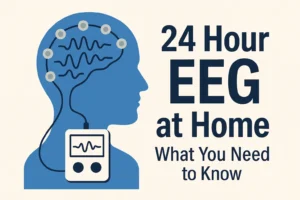
Professional infographic explaining 24-hour EEG at home with clear text inside the design

24 Hour EEG at Home: The Best and Complete Guide You Must Read

24 hour EEG at home is becoming an increasingly valuable tool to study the brain’s activity. While a standard EEG (see [Introduction to EEG]) usually lasts about 20 to 30 minutes, this short time is often not enough to catch abnormal brain activity. That’s why many doctors recommend the longer 24-hour EEG at home test.

24 Hour EEG at Home: The Best and Complete Guide You Must Read Read More »

Illustration of a red blood drop and a blue brain silhouette with text highlighting early Alzheimer’s diagnosis using a simple blood test.

Early Alzheimer’s Diagnosis with a Simple Blood Test

Alzheimer’s disease is the most common cause of dementia worldwide, affecting millions of people and families. Until now, diagnosing Alzheimer’s early has been very difficult. Doctors usually relied on cognitive testing, brain imaging (like PET scans), or spinal fluid analysis, which are costly and not always accessible. But a new breakthrough is changing this picture:

Early Alzheimer’s Diagnosis with a Simple Blood Test Read More »

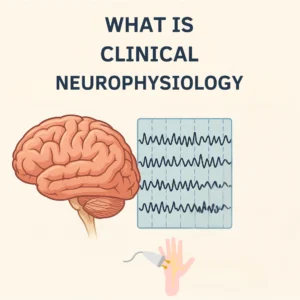
What is Clinical Neurophysiology – illustration of brain, EEG waves, and nerve conduction test.

What is Clinical Neurophysiology? 5 Important Facts Explained

What is Clinical Neurophysiology? It is a medical specialty that focuses on understanding how the nervous system works in real time. By using advanced tests such as EEG, EMG, nerve conduction studies, and sleep studies, clinical neurophysiology helps doctors diagnose and manage conditions like epilepsy, neuropathies, and sleep disorders. Introduction Clinical Neurophysiology may sound like

What is Clinical Neurophysiology? 5 Important Facts Explained Read More »

cosmic brain visualization stockcake

Introduction to EEG

1. Introduction: The Clinical Utility of EEG Electroencephalography (EEG) remains one of the most accessible and powerful tools in clinical neurophysiology. In everyday practice, it is often the first test requested when epilepsy is suspected, but its interpretation requires more than recognizing patterns—it requires understanding what those patterns mean in real clinical scenarios. 2. Neurophysiological

Introduction to EEG Read More »