Clinical Neurophysiology

Pregnancy-Related Carpal Tunnel Syndrome: An EMG Teaching Case with Sensory Conduction Block

Every clinical neurophysiologist sees carpal tunnel syndrome (CTS) regularly—it is the bread and butter of electrodiagnostic medicine. During pregnancy, CTS is incredibly common, typically driven by hormonal shifts and fluid retention that lead to mild-to-moderate symptoms and classic electrophysiological slowing. However, clinical neurophysiology is rarely a “one-size-fits-all” discipline. Every so often, a routine referral presents […]
Pregnancy-Related Carpal Tunnel Syndrome: An EMG Teaching Case with Sensory Conduction Block Read More »

Artificial Intelligence in Clinical Neurophysiology: Current Advances, Challenges, and Future Perspectives

Introduction Artificial Intelligence in Clinical Neurophysiology is fundamentally transforming the field, revolutionizing how neurologists and clinical neurophysiologists interpret electroencephalography (EEG), electromyography (EMG), nerve conduction studies (NCS), and neuroimaging data. The integration of machine learning (ML) and deep learning algorithms has evolved from experimental research to practical clinical applications, with AI systems now achieving diagnostic accuracy

Artificial Intelligence in Clinical Neurophysiology: Current Advances, Challenges, and Future Perspectives Read More »

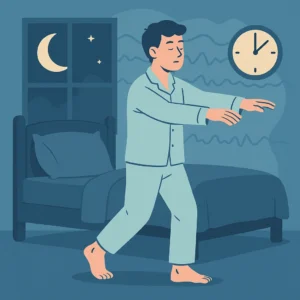
Illustration of an adult man sleepwalking in a bedroom at night, symbolizing sleepwalking in adults triggered by sleep deprivation, with moon, bed, and clock.

Sleepwalking in Adults Triggered by Sleep Deprivation: Causes, Diagnosis with Polysomnography, and Management

Introduction Sleepwalking in adults triggered by sleep deprivation (somnambulism) is often associated with children, but it can persist or appear in adulthood, sometimes leading to significant health and safety concerns. One of the strongest triggers identified in adults is sleep deprivation or “sleep debt.” Clinical studies have shown that lack of sleep can dramatically increase

Sleepwalking in Adults Triggered by Sleep Deprivation: Causes, Diagnosis with Polysomnography, and Management Read More »

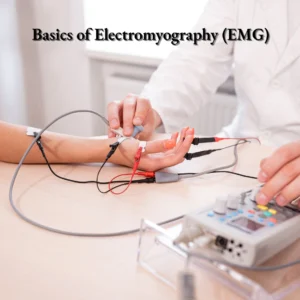
Illustration of electromyography with upper limb, electrodes, and wave patterns representing EMG signals

Basics of Electromyography (EMG): Principles, Technique, Clinical Uses, and Interpretation

🔵 Note: This article is intended for healthcare professionals and contains advanced medical information. 1. Introduction Electromyography (EMG) is a diagnostic test used in clinical neurophysiology to assess the electrical activity produced by skeletal muscles. It helps evaluate the health of muscles and the nerve cells (motor neurons) that control them. Why it matters: EMG

Basics of Electromyography (EMG): Principles, Technique, Clinical Uses, and Interpretation Read More »

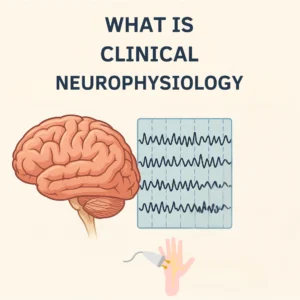
What is Clinical Neurophysiology – illustration of brain, EEG waves, and nerve conduction test.

What is Clinical Neurophysiology? 5 Important Facts Explained

What is Clinical Neurophysiology? It is a medical specialty that focuses on understanding how the nervous system works in real time. By using advanced tests such as EEG, EMG, nerve conduction studies, and sleep studies, clinical neurophysiology helps doctors diagnose and manage conditions like epilepsy, neuropathies, and sleep disorders. Introduction Clinical Neurophysiology may sound like

What is Clinical Neurophysiology? 5 Important Facts Explained Read More »

cosmic brain visualization stockcake

Introduction to EEG

1. Introduction: The Clinical Utility of EEG Electroencephalography (EEG) remains one of the most accessible and powerful tools in clinical neurophysiology. In everyday practice, it is often the first test requested when epilepsy is suspected, but its interpretation requires more than recognizing patterns—it requires understanding what those patterns mean in real clinical scenarios. 2. Neurophysiological

Introduction to EEG Read More »