Tests & Procedures

How to prepare for your visit

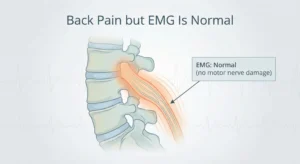
Back pain with normal EMG showing nerve irritation without permanent nerve damage

Back Pain but EMG Is Normal? Why You Still Hurt

Introduction: When “Normal” Doesn’t Feel Good Receiving a “normal” test result is usually a moment of relief. But if you are suffering from chronic back pain or shooting leg pain, being told your EMG (Electromyography) is normal can feel confusing, frustrating, or even invalidating. You might find yourself asking: If the test is normal, why […]

Back Pain but EMG Is Normal? Why You Still Hurt Read More »

A neurophysiologist explaining nerve conduction study results on a monitor to a patient in a clinic.

My Doctor Ordered a Nerve Conduction Study (NCS). What Are They Looking For?

Introduction If you are searching online hoping to understand why your doctor ordered a nerve conduction study, you are not alone. Leaving an appointment with a referral slip for a test you’ve never heard of can be unsettling. Why do you need this? Does it mean you have serious nerve damage? It is normal to

My Doctor Ordered a Nerve Conduction Study (NCS). What Are They Looking For? Read More »

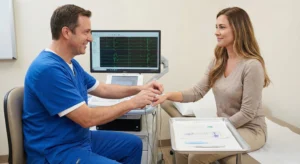
A smiling male clinical neurophysiologist in blue scrubs applying surface electrodes to the hand of a relaxed female patient in a modern clinic room, with an EMG monitor displaying waveforms in the background.

Is an EMG Test Painful? A Clinical Neurophysiologist Explains What to Really Expect

Introduction If your doctor has recommended an Electromyography (EMG) test, you have likely already visited Google to ask the big question: “Is an EMG painful?” It is completely normal to be anxious. The internet is full of conflicting stories and forums where people share their worst experiences. However, the reality of the test is often

Is an EMG Test Painful? A Clinical Neurophysiologist Explains What to Really Expect Read More »

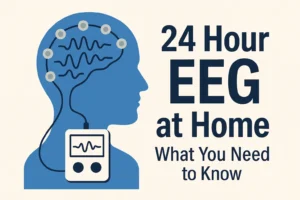
Professional infographic explaining 24-hour EEG at home with clear text inside the design

24 Hour EEG at Home: The Best and Complete Guide You Must Read

24 hour EEG at home is becoming an increasingly valuable tool to study the brain’s activity. While a standard EEG (see [Introduction to EEG]) usually lasts about 20 to 30 minutes, this short time is often not enough to catch abnormal brain activity. That’s why many doctors recommend the longer 24-hour EEG at home test.

24 Hour EEG at Home: The Best and Complete Guide You Must Read Read More »

Illustration of a red blood drop and a blue brain silhouette with text highlighting early Alzheimer’s diagnosis using a simple blood test.

Early Alzheimer’s Diagnosis with a Simple Blood Test

Alzheimer’s disease is the most common cause of dementia worldwide, affecting millions of people and families. Until now, diagnosing Alzheimer’s early has been very difficult. Doctors usually relied on cognitive testing, brain imaging (like PET scans), or spinal fluid analysis, which are costly and not always accessible. But a new breakthrough is changing this picture:

Early Alzheimer’s Diagnosis with a Simple Blood Test Read More »