

Introduction
Receiving a diagnosis of peripheral neuropathy can feel overwhelming. Suddenly, the “pins and needles” or numbness you’ve been feeling has a name, but that doesn’t make the sensation any less frustrating.
If you are reading this, you likely know what neuropathy is. What you really want to know is: How do I live with it?
The truth is, while medical treatments and medications are vital, your daily habits play a massive role in how you feel. Small adjustments to your routine can significantly reduce pain, prevent serious injury, and help you reclaim your confidence.
At NeuromedHub, we believe in empowering patients. Here are five practical, daily strategies to help you live well with peripheral neuropathy.
1. Become Obsessive About Foot Care
Why it matters: When nerves in the feet are damaged, you lose “protective sensation.” This means you might step on a piece of glass or develop a blister without ever feeling it. In diabetic neuropathy, a small, unnoticed cut can quickly turn into a serious infection.
Action Plan:
The Daily Inspection: Make it a habit to check your feet every single evening. If you can’t see the bottoms of your feet, use a floor mirror or ask a family member to help. Look for cuts, redness, or blisters.
The “Shake Out” Rule: Before you put your shoes on, shake them out. A tiny pebble that you can’t feel can cause skin breakdown over a few hours of walking.
Go Seamless: Invest in seamless socks designed for diabetics. Seams can cause friction points that irritate fragile skin.
Pro Tip: Never walk barefoot—even indoors. A simple pair of house slippers with a hard sole can save you from a trip to the emergency room.
2. Master Your Sleep Environment
Why it matters: Many patients report that their burning or tingling sensations get worse at night. This is often because there are fewer distractions, but also because the weight of heavy blankets can overstimulate sensitive nerves (a condition called allodynia).
Action Plan:
Use a Bed Cradle: This is a simple device that lifts the sheets off your feet while keeping you warm. It prevents the fabric from rubbing against sensitive toes.
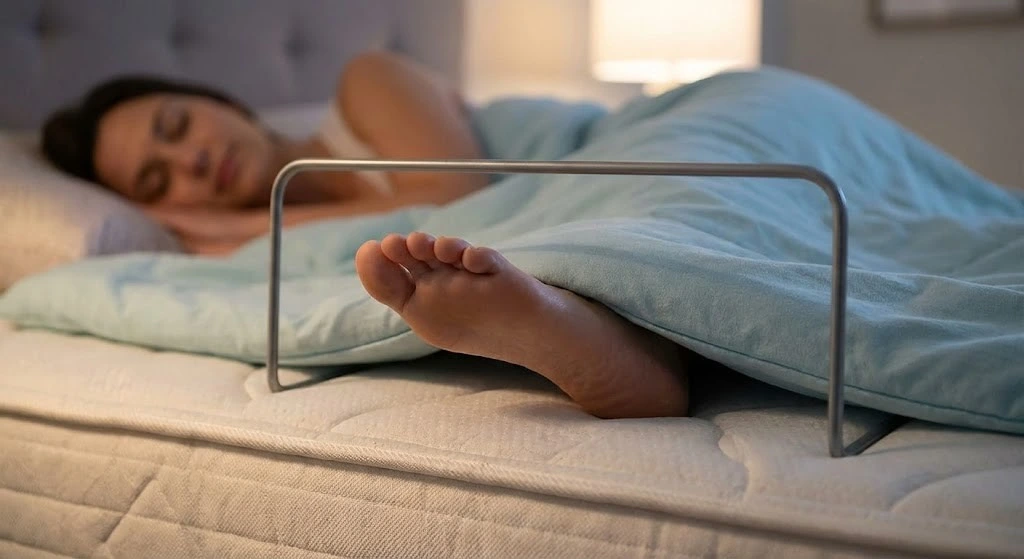
Temperature Control: Heat often aggravates nerve pain. Try keeping your bedroom cooler, or soaking your feet in tepid (not hot) water before bed to soothe them.
Pillow Support: If you sleep on your side, place a pillow between your knees to prevent them from pressing against each other.
3. Fall-Proof Your Home
Why it matters: Your nerves don’t just send pain signals; they tell your brain where your body is in space (proprioception). When these signals are disrupted, your balance suffers, increasing the risk of falls—especially in the dark.
Action Plan:
Clear the Path: Remove throw rugs. They are the number one cause of household trips for neuropathy patients.
Light It Up: Install motion-sensor nightlights in your hallway and bathroom. Relying on your eyes becomes essential when you can’t rely on the feeling in your feet.
Non-Slip Everywhere: Use non-slip mats in the shower and bathtub.
4. Move It to Improve It (Safely)
Why it matters: It feels counterintuitive to move when you are in pain, but exercise is crucial. It improves blood flow, which brings oxygen to damaged nerves, and helps control blood sugar levels (vital for diabetic patients).
Action Plan:
Go Low Impact: Avoid running or high-impact jumping, which puts stress on numb feet. Instead, try stationary cycling, swimming, or chair exercises.
Balance Training: Simple exercises, like standing on one foot while holding onto a kitchen counter, can help retrain your brain and improve stability.
5. Nutrition: Fuel Your Nerves
Why it matters: Nerves need specific nutrients to repair and function. High blood sugar is toxic to nerves, while certain vitamin deficiencies can mimic or worsen neuropathy.
Action Plan:
Watch the B12: Vitamin B12 deficiency is a common cause of neuropathy. Ensure your diet includes B12-rich foods (meat, fish, eggs) or speak to your doctor about supplements.
Stabilize Blood Sugar: If your neuropathy is related to diabetes, keeping your glucose levels in range is the single most effective way to stop the progression of nerve damage.
When to Call Your Doctor
Living well means knowing when to seek help. Contact your healthcare provider if you notice:
A cut or sore on your foot that isn’t healing.
Noticeable changes in your balance or coordination.
Pain that prevents you from sleeping despite trying the tips above.
Conclusion
Peripheral neuropathy changes your life, but it doesn’t have to define it. By building these safety checks and habits into your daily routine, you can protect your nerves and focus on the things you enjoy.
Have you been recently diagnosed and feel unsure about your test results? Check out our Patient Library for simple explanations of common terms, or read our guide on [Understanding Your EMG Report] .